Home Battery Storage in the Czech Republic: Sizes, Costs & Grid Rules
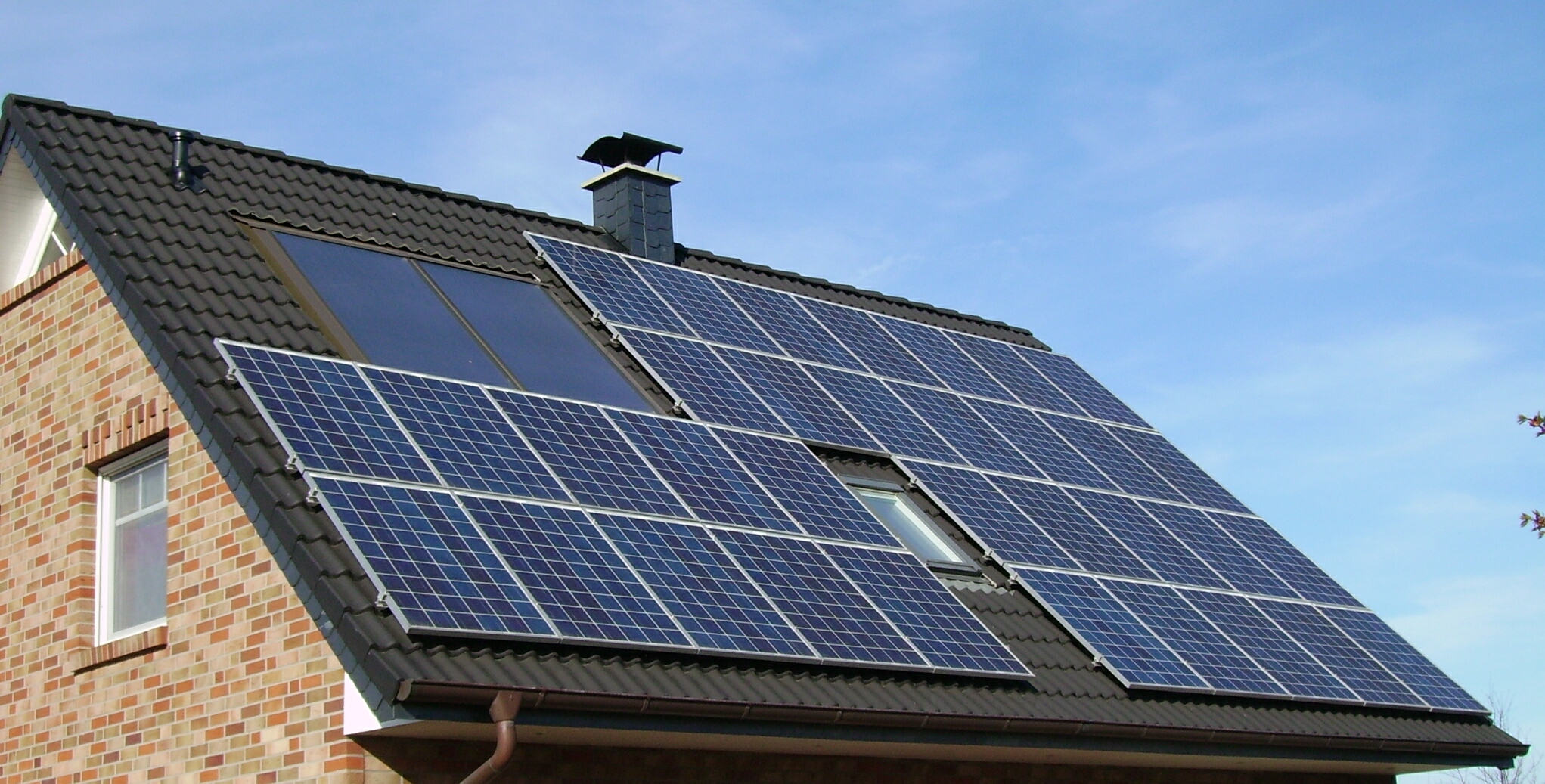
A rooftop solar installation generates most of its electricity during the middle of the day, when household consumption is often at its lowest. Without storage, surplus energy is exported to the grid — at rates that have fallen considerably since the early net metering period. Adding a home battery system changes this dynamic by holding midday surplus for use during the evening and overnight hours, increasing the share of self-consumed solar electricity and reducing dependence on grid imports.
This article looks at how residential battery storage systems work in practice, what technologies are in use, how Czech grid regulations affect installation and operation, and what the current cost landscape looks like.
How Home Battery Storage Works
A home battery system connects to the solar inverter (or through a hybrid inverter that combines PV conversion and battery management in one unit) and to the household AC circuit. During daylight hours, when PV generation exceeds consumption, excess current charges the battery. In the evening, the battery discharges to cover household load before the system draws from the grid.
The battery management system (BMS) monitors cell voltage, temperature, and state of charge, protecting the cells from overcharge and deep discharge. Most residential systems limit usable capacity to 80–90% of nominal capacity to extend cycle life.
Lithium-Ion Chemistry Variants
Nearly all residential battery storage sold in Czech Republic in 2024 uses lithium-ion chemistry. Three variants are commercially significant:
- LFP (Lithium Iron Phosphate): Lower energy density than other Li-ion variants, but thermally stable, long cycle life (3,000–6,000 full cycles), and tolerant of full charge states. The dominant choice for new residential installations in Czech Republic due to safety profile and longevity.
- NMC (Nickel Manganese Cobalt): Higher energy density, meaning a smaller physical footprint per kWh. Cycle life typically 1,500–3,000 cycles. Used in some compact systems where installation space is limited.
- NCA (Nickel Cobalt Aluminium): High energy density, used in some legacy systems. Less common in new residential installs.
For a home battery that will cycle once daily for 20+ years, LFP chemistry is better matched to the use case. NMC may be appropriate where wall space is a constraint.
System Sizing
Sizing a home battery involves balancing the storage capacity needed to shift solar surplus into the evening against the cost of additional battery modules. Rules of thumb used in the Czech market:
- 1–1.5 kWh of storage per kWp of solar capacity covers an average self-consumption scenario for a household with moderate daytime occupancy.
- A household consuming 5,000 kWh/year with a 5 kWp array and 7.5 kWh of battery storage typically achieves 65–75% solar self-sufficiency over a year (compared to 30–40% without storage).
- Oversizing the battery beyond 2 kWh per kWp of solar delivers diminishing returns — the battery cannot charge fully on overcast days and the added capital cost extends the payback period.
Czech installers commonly offer systems in 5, 10, or 15 kWh modules. Systems above 10 kWh are standard for larger homes or where EV charging is part of the energy plan.
Czech Grid Regulations and Connection Requirements
Battery storage connected to the low-voltage grid in Czech Republic falls under the same regulatory framework as the solar installation it pairs with. Key points:
- Battery systems operating in parallel with the grid must meet EN 50549-1 requirements, including automatic disconnection in the event of grid disturbance or outage (anti-islanding protection).
- Where a battery system changes the maximum export power of the installation, the DSO must be informed and may require a revised parallel operation agreement.
- Hybrid inverters — those handling both PV conversion and battery charging — must be on the DSO's approved equipment list. Most major brands (SMA, Fronius, Huawei, GoodWe, Solax) are approved across the main Czech DSOs.
- There is no general prohibition on battery storage for residential customers. Feed-in of battery-discharged energy (i.e. charging the battery from the grid at low-price hours and exporting during peak hours) requires a separate virtual power plant or aggregator arrangement and is not covered by a standard residential tariff.
Costs in 2024–2025
Battery storage prices fell significantly between 2022 and 2024 as LFP cell costs dropped globally. In the Czech residential market, indicative installed costs (including hybrid inverter, BMS, cabling, and commissioning) in early 2025:
- 5 kWh LFP system: CZK 80,000–120,000
- 10 kWh LFP system: CZK 140,000–200,000
- 15 kWh LFP system: CZK 200,000–280,000
These figures are before any subsidy. The Nová zelená úsporám programme includes battery storage as an eligible cost item when installed together with a solar PV system; the relevant subsidy amounts and conditions are covered in the incentives article.
Payback periods depend heavily on the electricity tariff, self-consumption rate, and how much of the surplus would otherwise be exported at low feed-in rates. At 2024 Czech household electricity prices (approximately CZK 5.50–7.50/kWh all-in), a well-sized storage system can reduce the payback period of the combined solar and storage investment to 8–12 years versus 10–15 years for PV alone in some scenarios.
Backup Power (Off-Grid Operation)
Some hybrid inverters support a backup or emergency power mode where the battery continues to supply selected circuits during a grid outage. This is not a full off-grid system — the inverter typically disconnects from the grid and operates in island mode, powering a subset of circuits from the battery and any current PV generation.
Czech regulations permit this mode of operation provided the system disconnects from the grid before switching to island mode (anti-islanding compliance). Not all hybrid inverters sold in Czech Republic have this capability enabled by default; it is worth confirming with the installer if backup power is a requirement.
Further Reading
- How Solar Panels Work: A Residential Guide
- Solar Subsidies & Incentives in Czech Republic
- Energy Regulatory Office (ERÚ) — grid connection requirements
- Nová zelená úsporám — State Environmental Fund
Last updated: 28 April 2025. Costs are indicative and subject to change.