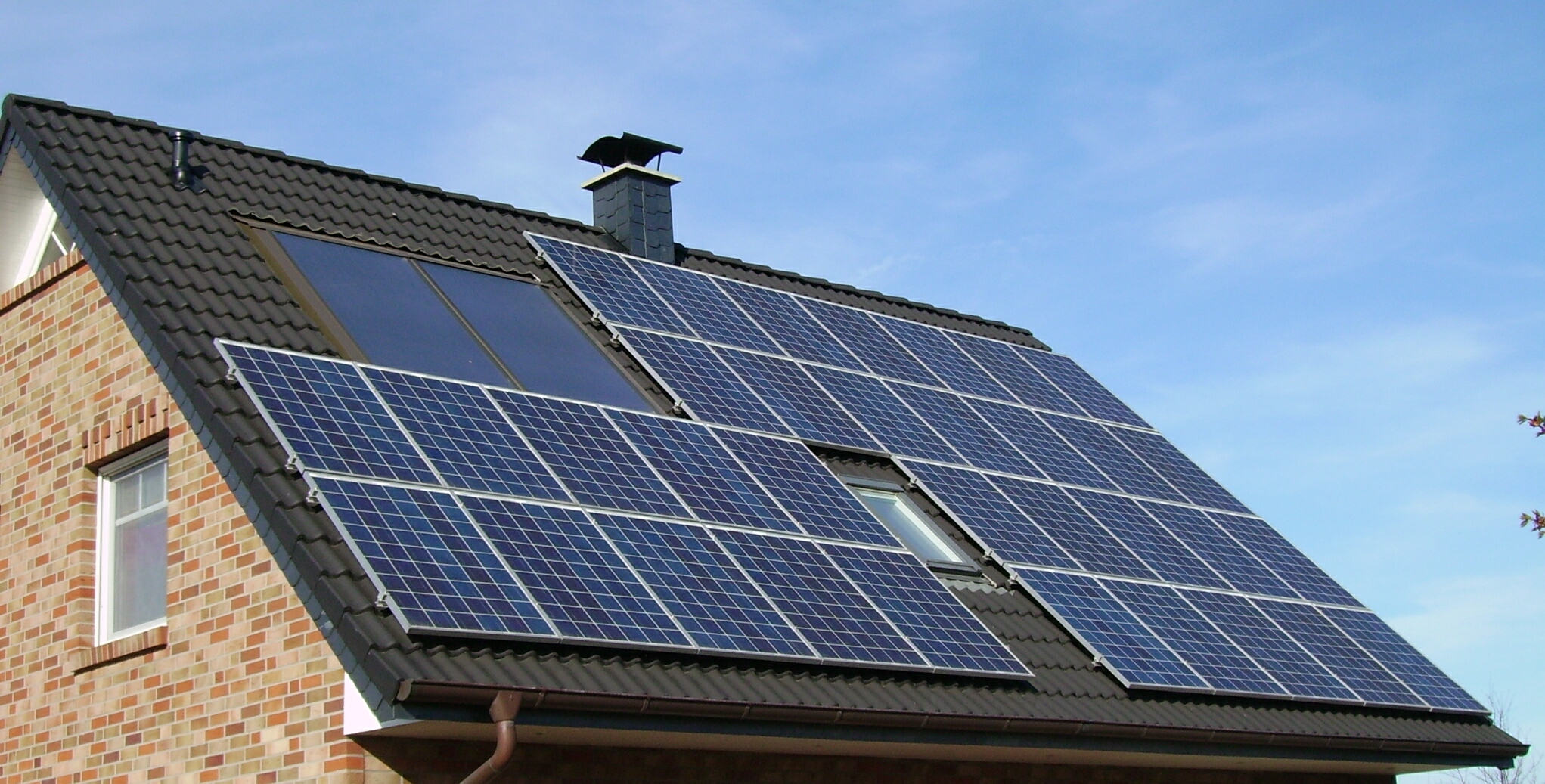
How Solar Panels Work: A Residential Guide for Czech Homeowners
Rooftop photovoltaic (PV) systems have become a standard feature of Czech residential construction and renovation over the past decade. Between 2019 and 2024, the number of registered household installations grew from roughly 40,000 to more than 180,000, driven by falling panel prices, improved grid connection procedures, and expanding subsidy availability. This article explains the underlying technology, the components that make up a complete system, and what the installation process looks like in practice.
The Photovoltaic Effect
A solar panel generates electricity through the photovoltaic effect. Each panel consists of silicon cells, typically 60 or 72 per panel in standard residential modules. When photons from sunlight strike the silicon, they dislodge electrons from their atoms. A built-in electric field within the cell pushes those electrons in one direction, creating a flow of direct current (DC).
The output of a single cell is small — typically 0.5 V and a fraction of an amp — so cells are wired in series within a panel to reach a working voltage of around 30–40 V per panel, and panels are strung together in arrays to reach the voltage and power levels a household needs.
Monocrystalline vs. Polycrystalline vs. Thin-Film
The three main panel technologies differ in manufacture, efficiency, and cost:
- Monocrystalline: Cut from a single silicon crystal, these panels achieve efficiencies of 19–23% and perform better in low-light conditions. They are the dominant choice in Czech residential installations today. Recognisable by uniform dark cells.
- Polycrystalline: Made from multiple silicon fragments melted together. Efficiency typically ranges from 15–17%. Lower cost per watt, but requires more roof area for the same output. Less common in new Czech installations.
- Thin-film: Deposited as a thin layer onto glass or metal. Flexible, lightweight, but lower efficiency (10–13%). Used in specific applications where panel weight is a constraint, not common in standard Czech residential rooftops.
For most Czech detached homes, monocrystalline panels in the 380–440 W range per panel offer the best combination of efficiency, longevity, and warranty coverage.
System Components
A grid-connected residential solar installation consists of several components beyond the panels themselves.
Inverter
The inverter converts DC electricity from the panels into alternating current (AC) that household appliances and the public grid use. In residential systems, three inverter architectures are common:
- String inverter: All panels in a string connect to a single inverter. Simple and cost-effective; performance of the whole string is limited by the lowest-performing panel (e.g. if one panel is shaded).
- Microinverter: Each panel has its own small inverter. More expensive per watt, but each panel operates independently, reducing shading losses. Easier monitoring per panel.
- Power optimiser + string inverter (DC optimiser): Optimisers at panel level maximise each panel's output and feed into a central string inverter. A middle ground between string and micro configurations.
Czech DSOs (distribution system operators) require that inverters meet EN 50549-1 and are certified for the local grid frequency (50 Hz) and disconnection requirements.
Generation Meter and Smart Meter
A bidirectional smart meter records both energy consumed from the grid and energy exported to it. Czech DSOs install these meters at no additional charge when processing a grid connection application for a new solar installation.
DC Cabling, AC Cabling, and Mounting
DC cabling rated for outdoor exposure (typically 4–6 mm² cross-section) runs from the panels to the inverter. MC4 connectors are the standard at the panel end. AC cabling connects the inverter output to the household distribution board. Mounting systems attach the panel frames to roof battens using aluminium rail systems — the most common type for pitched tile roofs in Czech Republic.
System Sizing for a Czech Household
Sizing a PV system involves matching annual generation to household consumption, while accounting for self-consumption patterns and any plans to add storage or an electric vehicle charger.
A useful starting point:
- Annual household consumption (kWh/year) ÷ specific annual yield in your location (kWh/kWp) = required system size (kWp)
For Prague, the specific yield is approximately 1,000–1,050 kWh/kWp per year. For South Moravia, it reaches 1,100–1,150 kWh/kWp. A household consuming 5,000 kWh/year in Prague would need roughly 5 kWp — about 12 to 13 standard 400 W panels.
Roof orientation and tilt angle affect yield significantly. A south-facing roof at 30–40° delivers close to the maximum annual yield. East-west split arrays (panels on both sides of a gable roof) produce a wider generation curve through the day, which can improve self-consumption even if peak output is lower.
The Installation Process
A typical Czech residential installation follows these stages:
- Site survey and design: The installer assesses roof structure, orientation, shading objects, and existing electrical installation. A system design is produced, specifying panel count, inverter model, and cabling route.
- Notification to building authority: Systems up to 20 kW generally require an ohlášení (building notification) rather than a full permit. The installer usually handles this.
- Grid connection application: The installer submits a parallel operation application to the relevant DSO (e.g. ČEZ Distribuce, EG.D, or PREdistribuce). Grid connection approval can take 4–12 weeks depending on local grid capacity.
- Physical installation: Mounting hardware is fixed to roof battens. Panels are clipped into the rails. DC cabling is routed to the inverter location (typically in the attic or garage). The inverter is mounted and wired to the distribution board.
- Commissioning and DSO inspection: Once the DSO confirms the connection, the system is switched on, the inverter is configured, and a final inspection confirms compliant operation.
- Metering and billing: The DSO installs or programs the smart meter. The electricity supplier adjusts the tariff to accommodate the new generation point.
From signed contract to operational system, timelines in Czech Republic in 2024 ranged from 6 weeks to 5 months, largely depending on DSO processing speed in the given distribution area.
Output and Performance
Monitoring inverter output is straightforward: most modern inverters include a Wi-Fi module and connect to the manufacturer's cloud platform. Generation data can be viewed by day, month, or year.
Panel output degrades slowly over time. Most manufacturers guarantee at least 80% of rated output after 25 years, corresponding to a degradation rate of roughly 0.4–0.5% per year. In practice, many installations deployed in the early 2010s are still generating within 5% of their original output.
Dirt accumulation (dust, pollen, bird droppings) can reduce output by 2–5% if panels are not cleaned. Rain washes most deposits off; manual cleaning once or twice a year is usually sufficient for pitched roofs in Czech Republic's climate.
Further Reading
- Home Battery Storage in the Czech Republic — what happens to surplus generation
- Solar Subsidies & Incentives in Czech Republic — Nová zelená úsporám and other schemes
- Energy Regulatory Office (ERÚ) — official tariff and grid connection regulations
- Solargis — Czech Republic solar resource data
Last updated: 28 April 2025. Content reflects regulations and technology available as of that date.

